Tiny Flowers, Big Impact: The Hidden Insect Allies in Your Permaculture Orchard
If you’ve ever walked through a conventional orchard in the Treasure Valley, you’ve probably noticed something missing — life. Rows of identical trees, bare soil underneath, and the occasional spray rig parked at the end of a lane. It’s quiet in a way that feels wrong.
Now picture something different. A late-June morning in a food forest where the mountain mint is just starting to bloom. You lean in close and the flower heads are crawling with tiny wasps — not the kind that sting you at a barbecue, but parasitoid wasps smaller than a grain of rice. They’re here because the flowers are exactly the right shape. And they’re about to do something remarkable: they’re going to lay their eggs inside the larvae of the very pests that would otherwise destroy your cherry and apple crop.
This is ecological pest management in action, and it starts with one counterintuitive idea — the most important plants in your permaculture orchard might be the ones that never produce a single piece of fruit.
Why Tiny Flowers Matter More Than You Think
Most people plant flowers in their yard for color. That’s fine. But if you’re designing a permaculture orchard or edible landscape anywhere in the Treasure Valley, flower shape matters far more than flower color.
The beneficial insects that suppress orchard pests — parasitoid wasps, tachinid flies, hoverflies, and tiny native bees — share a physical limitation. They have short mouthparts. They can’t reach nectar buried at the bottom of a long tubular flower the way a bumblebee can. They need shallow, open-faced flowers where the nectar is right there at the surface, easy to access.
This is why a no-spray food forest built around the right companion plants can dramatically reduce pest pressure without a single chemical application. You’re not fighting insects with sprays. You’re recruiting an army of insects that do the work for you.
Meet the Tiny Allies
Let’s talk about who actually shows up when you plant the right things.
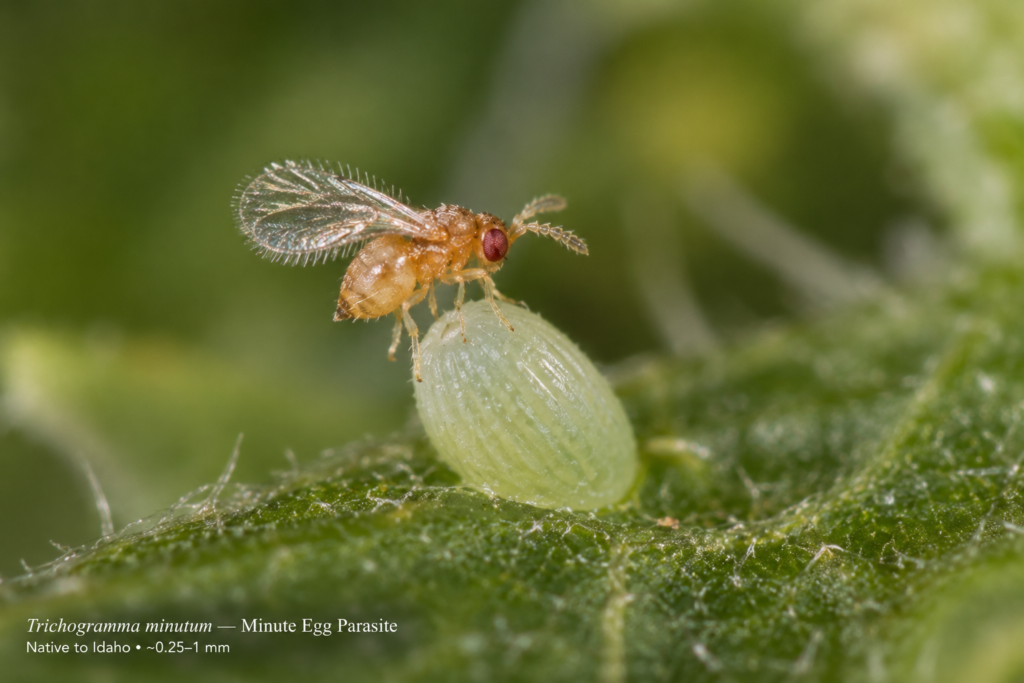
Parasitoid wasps are the headliners. Species in the families Braconidae and Ichneumonidae lay their eggs directly inside pest caterpillars and larvae — including codling moth larvae, the number-one enemy of apple growers across the Treasure Valley. The wasp larva develops inside the pest, consuming it from the inside. It sounds like science fiction, but it’s been happening in healthy ecosystems for millions of years. The key is that adult parasitoid wasps need nectar from shallow flowers to fuel their search for hosts. No flowers, no wasps. No wasps, more codling moth.
Tachinid flies are the unsung heroes. They look like slightly fuzzy houseflies, and most people walk right past them. But many tachinid species parasitize tent caterpillars, cutworms, stink bugs, and Japanese beetles. They’re drawn to the same shallow flower structures — especially plants in the carrot family (Apiaceae) and the aster family (Asteraceae) that produce broad, flat-topped clusters of tiny florets.
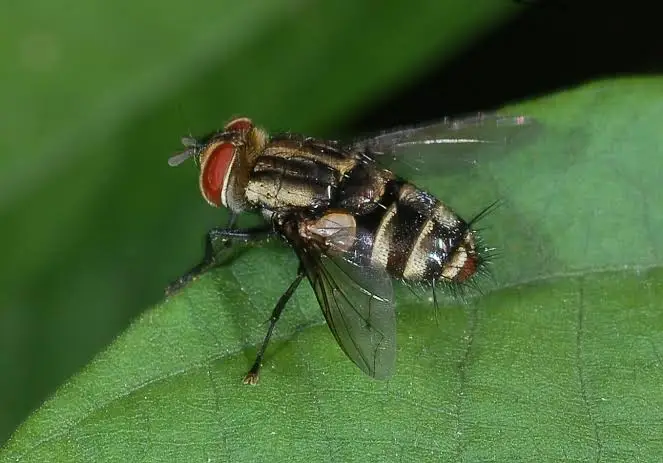
Hoverflies (Syrphidae) pull double duty. The adults are important pollinators that hover in place like tiny helicopters. Their larvae are voracious aphid predators. A single hoverfly larva can consume hundreds of aphids during its development, and the adults need — you guessed it — small, open flowers for nectar.
The Plants That Make It Work
So what do you actually plant? Here are some of the species we build into every food forest design at The Sovereign Grove, and why each one earns its spot.
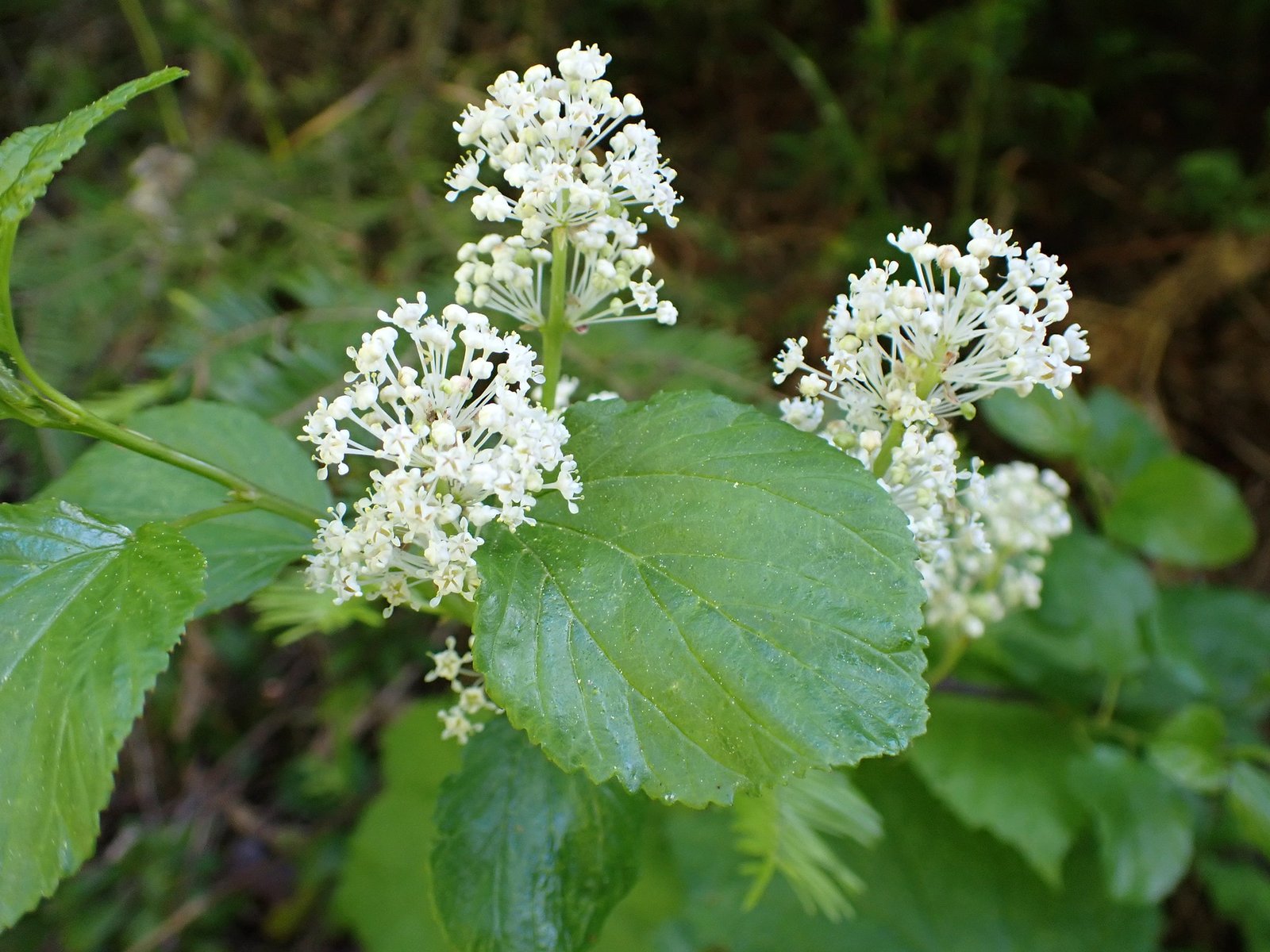
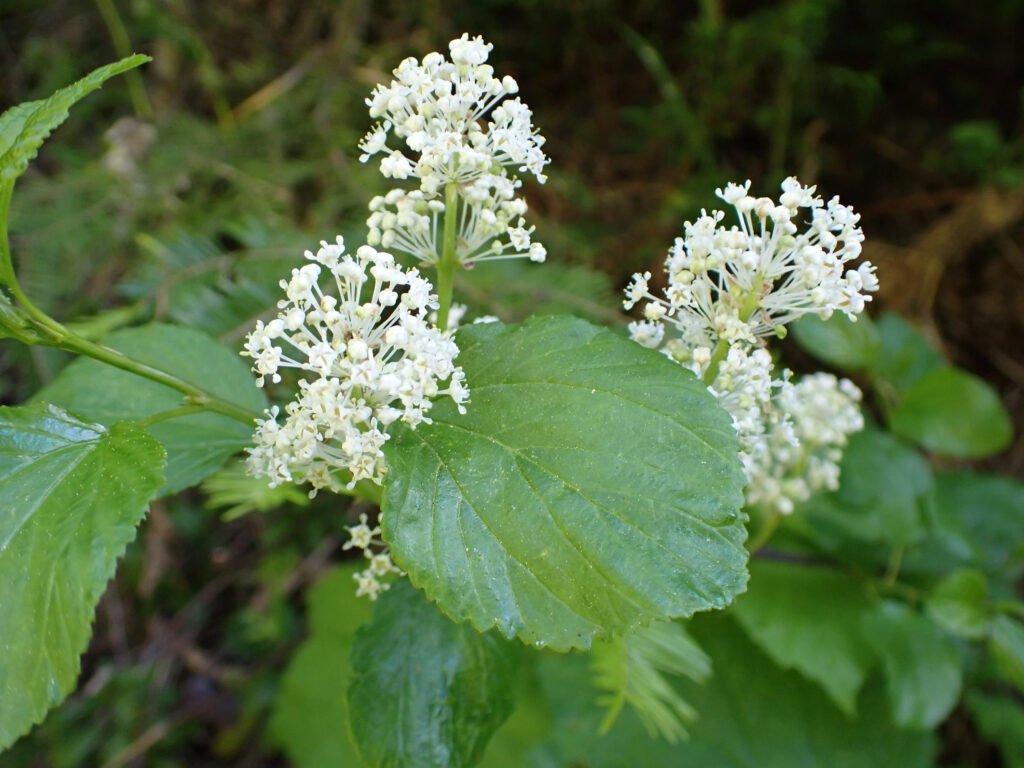
Redstem ceanothus (Ceanothus sanguineus) is what I consider an anchor species for any edible landscape in Idaho. It’s native to our region, fixes atmospheric nitrogen in the soil through a symbiotic relationship with Frankia bacteria (meaning it’s literally fertilizing your orchard just by growing), and it blooms in May and June — precisely timed to the emergence of cherry fruit fly. That timing isn’t a coincidence in our designs. We position ceanothus near cherry and stone fruit trees so that parasitoid wasps fueling up on ceanothus nectar are steps away from the pests they’re hunting.
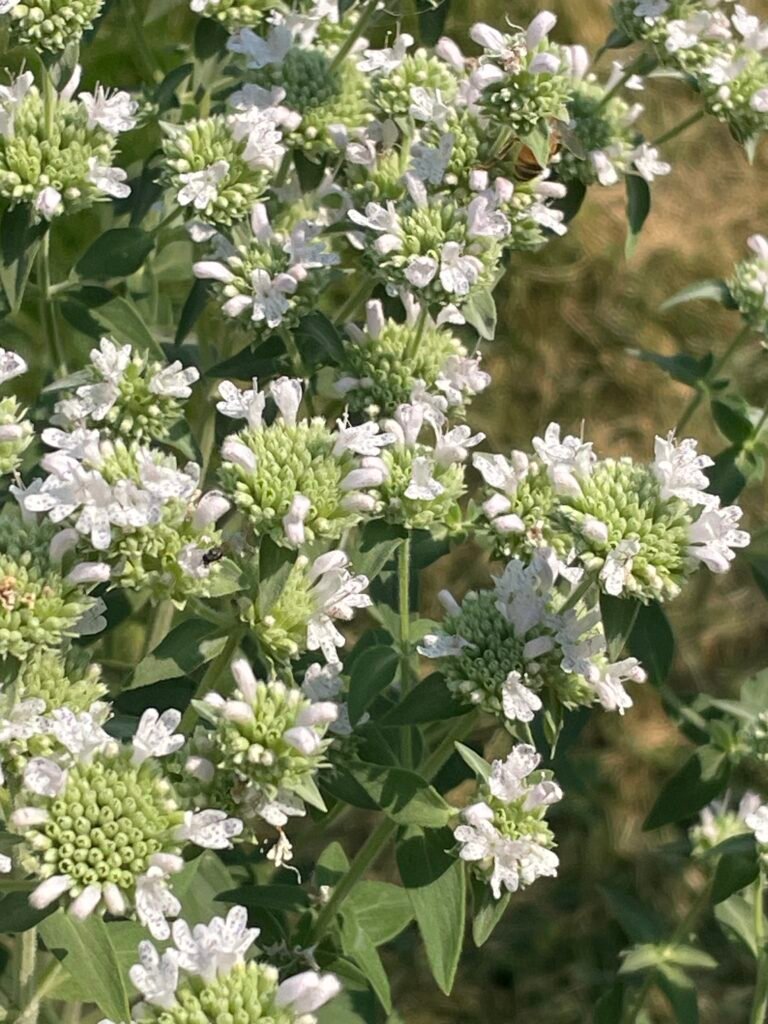
Mountain mint (Pycnanthemum species) has been documented in Penn State research trials as one of the most effective plants for recruiting parasitoid wasps and other beneficial insects. The flower heads are dense clusters of tiny white florets, and on a warm July afternoon, a single mountain mint plant can be hosting dozens of different beneficial insect species simultaneously. It’s drought-adapted once established and thrives in the full-sun conditions typical of Treasure Valley properties.
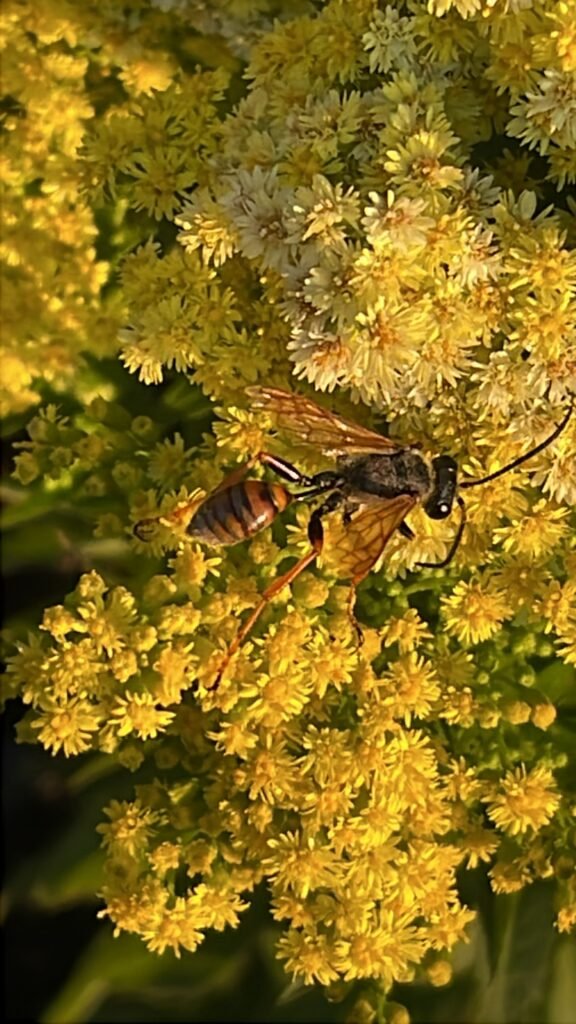
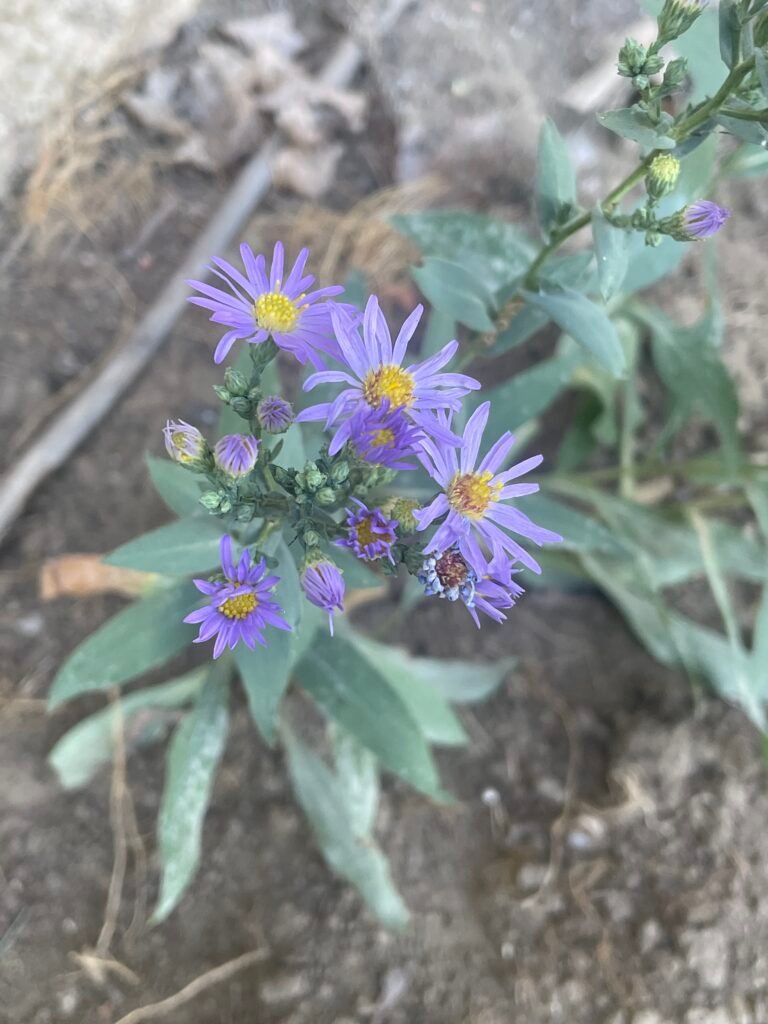
Missouri goldenrod (Solidago missouriensis) and smooth blue aster (Symphyotrichum laeve) are what Doug Tallamy’s research identifies as keystone species — native plants that support disproportionately large numbers of other organisms. Goldenrod alone supports over 100 species of Lepidoptera (butterflies and moths), which in turn support the parasitoid wasps and birds that keep pest populations in balance. These bloom in late summer and fall, extending the food supply for beneficials well past the main fruit harvest season.
Design Placement Isn’t Random
One thing that separates a thoughtful permaculture orchard from just scattering some wildflowers around your fruit trees — the placement of these companion plants follows ecological logic.
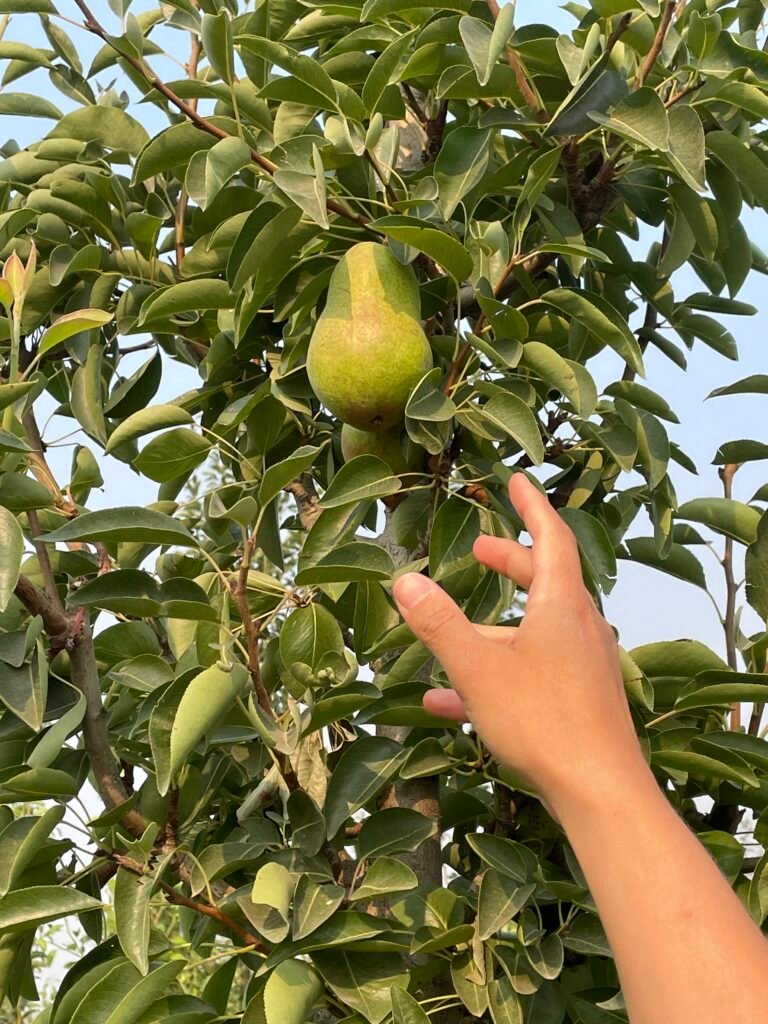
In every food forest we design for clients across the Treasure Valley, the strongest parasitoid-recruiting plants get positioned in full sun and nearest the fruit trees with the highest pest pressure. Cherries, apples, and pears face the most significant insect challenges in our region, so those trees get the closest proximity to ceanothus, mountain mint, and the other key recruiters.
This isn’t decorative landscaping. It’s applied ecology — reducing the distance a tiny beneficial insect has to travel between its nectar source and its pest host.
The Bigger Picture: Habitat, Not Just a Garden
When you plant this way, something bigger happens. Your property stops being just a yard with some fruit trees and starts functioning as genuine wildlife habitat. The insect diversity attracts birds. The birds contribute to pest control and seed dispersal. Native pollinators establish nesting sites. Over a few seasons, the whole system becomes more resilient and more productive with less intervention — not more.
This is what we mean when we talk about a self-sustaining, regenerative orchard design. It’s not just about what you harvest. It’s about building a living system where each element supports the others — a water-wise approach that works with Idaho’s high-desert climate instead of fighting it.
At The Sovereign Grove, we design and install these systems for homeowners throughout the Treasure Valley — from properties in Boise and Eagle to Meridian, Nampa, Caldwell, and all the way out to Weiser and Council. Whether you’re starting with a blank acre or want to convert an existing landscape into a functioning food forest, the companion planting layer is where the magic happens.
Our Sovereign Blueprint ($4,500) includes a personal site visit and custom design layout that accounts for your specific soil, sun exposure, and microclimate conditions — with every companion plant placed for a reason. Our Sovereign Plant Pack ($2,500) gives you the same premium plant material, ready for pickup. Or let us handle everything with a full professional installation starting at $45,000.
Visit thesovereigngrove.com to learn more, or contact us to schedule a site visit.
The Sovereign Grove provides permaculture orchard design, food forest installation, and edible landscape consulting throughout the Treasure Valley and western Idaho — serving Ada, Canyon, Washington, Gem, Payette, and Adams counties.