The Best Fruit Trees for the Treasure Valley — And Why Most Nurseries Don’t Carry Them
If you’ve ever planted a fruit tree from a big box store in April, crossed your fingers, and ended up with wormy apples or a dead tree by August — you’re not alone. Most fruit trees sold in the Treasure Valley are chosen for shelf appeal, not for actual performance in Idaho’s high-desert climate.
The right variety on the right rootstock, planted in the right conditions, is the difference between a tree that struggles for years and one that produces heavy crops of clean fruit with minimal intervention. At The Sovereign Grove, every tree in our permaculture orchard packages is selected for disease resistance, fruit quality, and proven toughness in our climate — hot summers, cold winters, alkaline soils, and limited water.
Here’s what we plant and why.
Apples
Every apple variety in our packages has documented resistance to fire blight — the most destructive apple disease in the Treasure Valley. We deliberately avoid popular heirloom varieties that look great in catalogs but struggle with our regional disease pressure. Many of our apples are on G.890 rootstock, bred for vigor and anchorage in challenging soils, though we always match rootstock to each property’s specific conditions.
Varieties we often include:
- Williams Pride — Ripens in August, ahead of peak codling moth season. Wonderful sweet, crisp flavor. One of the earliest disease-resistant apples available.
- RubyRush — A newer PRI-program release bred for disease resistance and outstanding eating quality.
- Triumph — Another modern PRI release with excellent flavor and strong resistance to fire blight, scab, and cedar apple rust.
- WineCrisp — Complex, sweet vinous flavor. Stores for months in simple cold storage — you can still be eating your own apples in February.
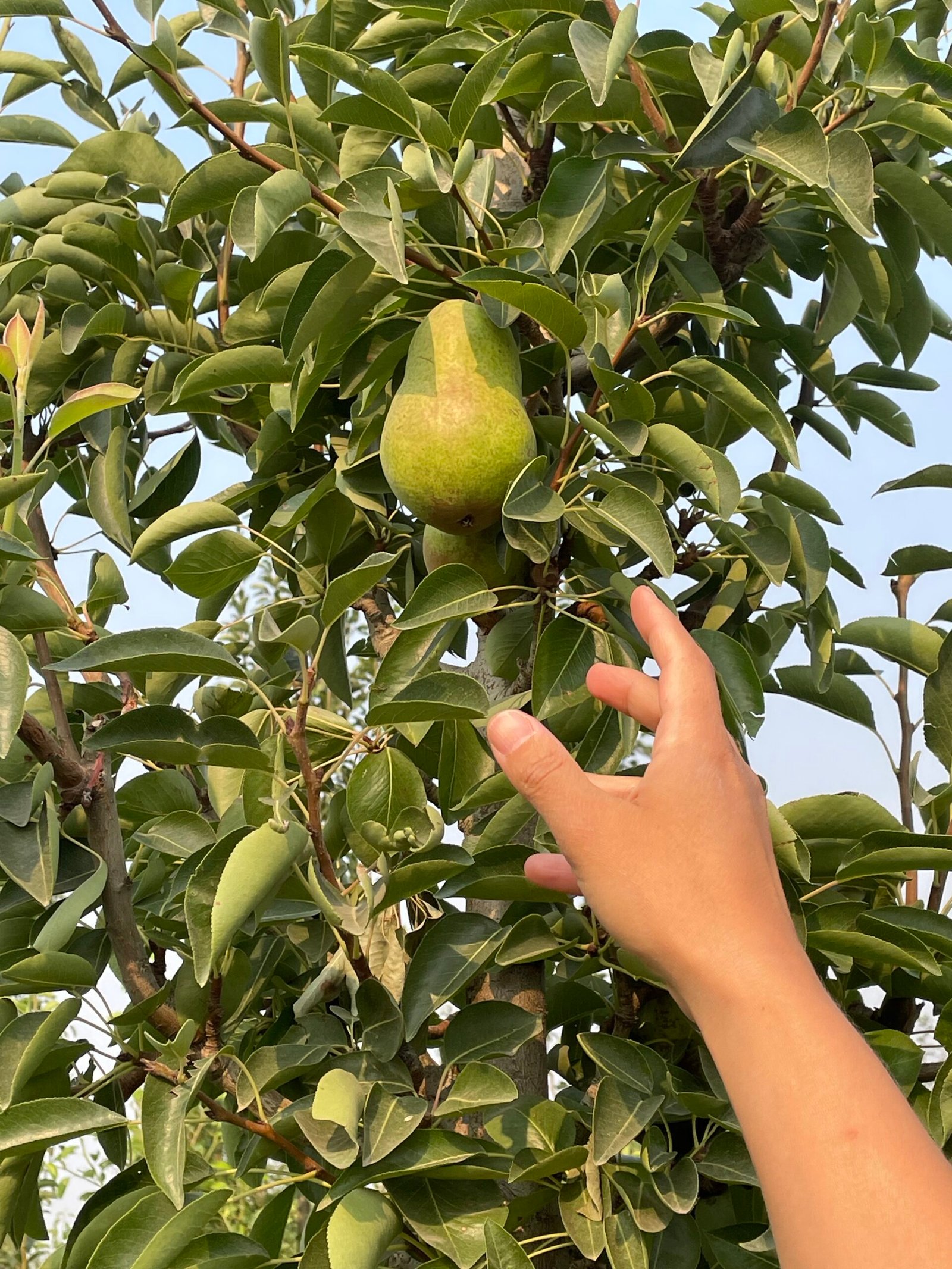
Pears
Fire blight resistance is non-negotiable for pears in our region — the disease can kill an entire unresistant pear tree in a single season. We match rootstock to site conditions, and some of our pears go on deep-rooting stock that makes them exceptionally drought-tolerant once established.
Varieties we often include:
- Harrow Sweet — A buttery, sweet dessert pear that handles our climate beautifully. Strong fire blight resistance.
- Juicy Jewel — A newer fire blight-resistant variety with exceptional sweetness and juice. One of the best-tasting modern pears available.
- Blake’s Pride — Excellent rich flavor with documented disease resistance.
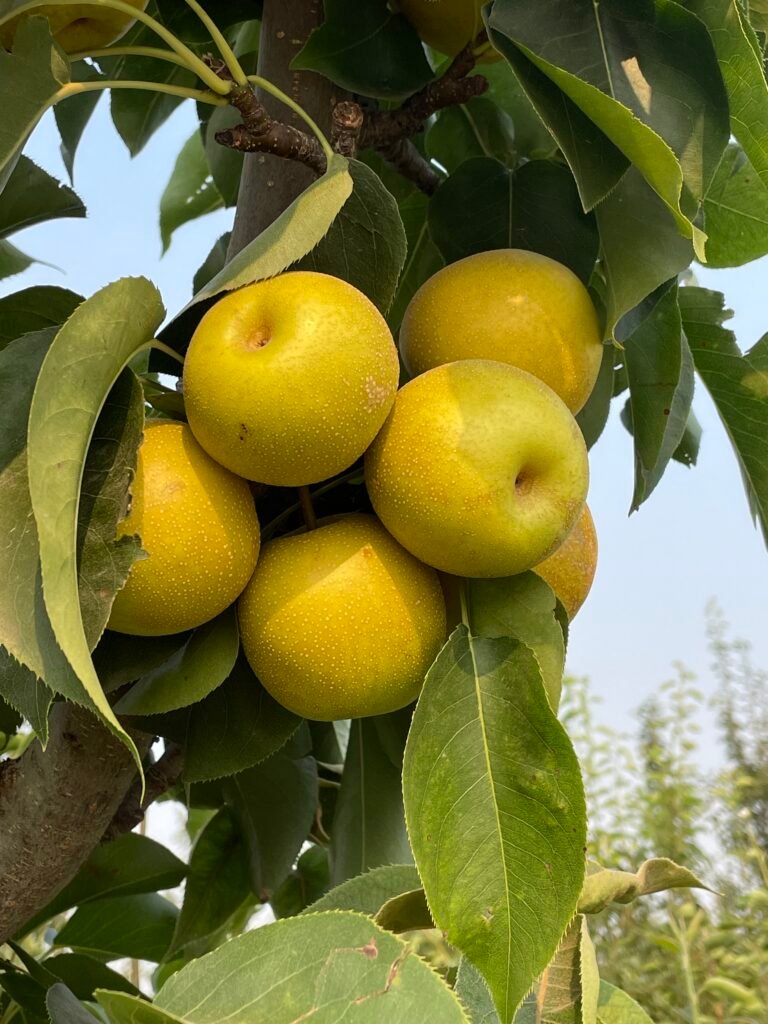
- Korean Giant — The showstopper. A massive Asian pear that can weigh over a pound per fruit, stores for months in a cool garage, and extends your fresh-eating season deep into winter.
Peaches
The Treasure Valley’s hot summers and dry air are exactly what peaches want. Our climate naturally suppresses many of the fungal diseases that plague peach growers in wetter regions. And here’s what most people don’t realize — codling moth, the pest behind most “wormy” fruit, strongly prefers apples and pears. Your peaches are largely off the menu. Beyond that natural advantage, we select peach varieties with strong resistance to bacterial spot and peach leaf curl — two of the most common diseases that weaken stone fruit in our region. That makes peaches one of the easiest, most rewarding tree fruits you can grow in a no-spray food forest.
Varieties we often include:
- Contender — The cold-hardiness champion. Handles late frosts better than most and produces heavy, reliable crops year after year.
- John Boy — Excellent mid-season freestone with rich flavor and beautiful fruit.
- Bounty — A proven heavy producer that performs consistently in our climate.
Nectarines
Same climate advantages as peaches, with the added appeal of smooth skin and intensely concentrated flavor. Like our peaches, every nectarine variety we select has strong resistance to bacterial spot and brown rot — the diseases most likely to cause problems on stone fruit in our climate. Nectarines are one of the most underplanted fruits in the Treasure Valley — most homeowners don’t realize how well they perform here.
Varieties we often include:
- NectaFest — A newer release with outstanding eating quality and reliable production in our zone.
- Silver Gem — A white-fleshed nectarine with a delicate, aromatic sweetness completely different from anything you’ll find at a grocery store.
Apricots
Almost tailor-made for the Treasure Valley — they love heat, they love dry air, and they produce some of the most intensely flavored fruit you can grow. Our apricot varieties are selected for resistance to brown rot and coryneum blight (shothole disease), which are the primary fungal threats to stone fruit in our region. The one management trick: plant on the north side of a structure to delay bloom slightly and reduce late-frost risk. A south-facing slope is actually the worst spot for an apricot, even though it seems counterintuitive.
Varieties we often include:
- Robada — Widely regarded as one of the best-flavored apricots available. Large, beautiful fruit.
- Sugar Pearls — A white-fleshed variety with an exceptional honey-sweet flavor profile.
Plums
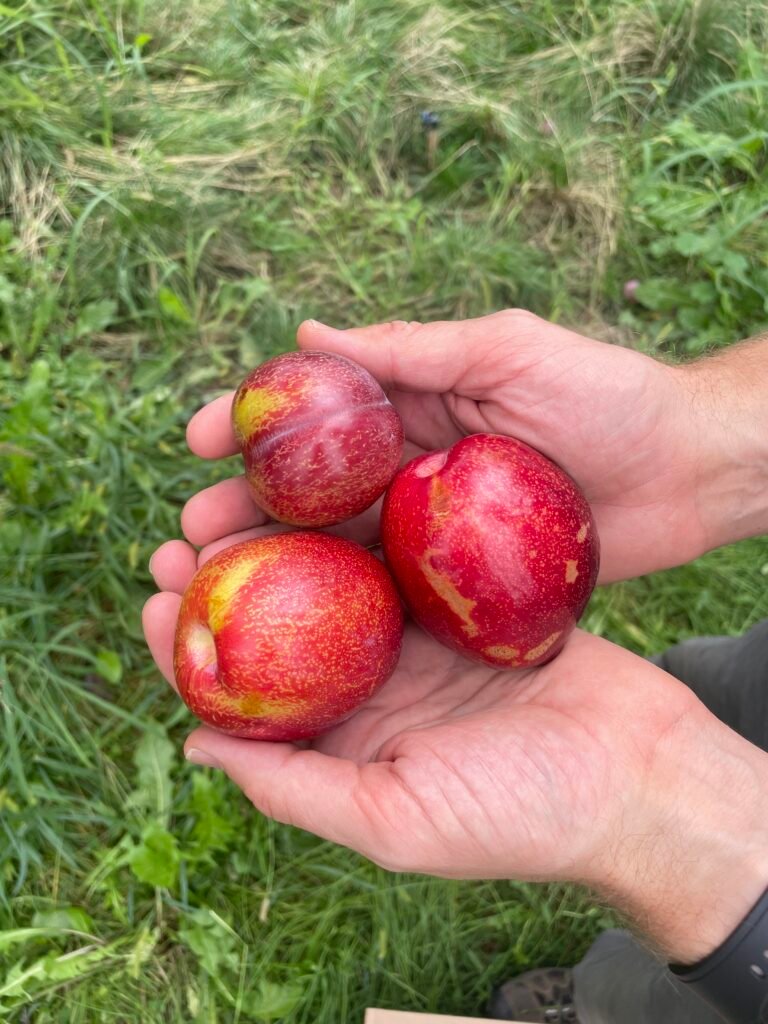
One of the most reliable and trouble-free fruit categories for our region. Pest pressure on plums is dramatically lower than on apples and pears, making them ideal for a no-spray permaculture orchard.
Varieties we often include:
- Spring Satin — Ripens early with sweet, juicy fruit.
- Queen Rosa — A gorgeous Japanese plum with excellent flavor and heavy production.
- Bluebyrd — A European freestone that’s self-fertile, so it doesn’t need a pollination partner. Perfect for fresh eating, drying, and preserves.
Cherries
Cherry fruit fly is the main challenge for cherry growers in the Treasure Valley. Our approach: pair early-ripening tart varieties that harvest before peak fly season with later sweet varieties that benefit from companion plants recruiting parasitoid wasps for natural pest control.
Varieties we often include:
- Northstar — A tart cherry workhorse. Naturally compact, self-fertile, ripens in mid-June before peak cherry fruit fly pressure. Outstanding for pies, jams, drying, and syrups.
- Black Pearl — A sweet cherry with excellent flavor and heavy production for fresh eating.
The Unusual Stuff — And Why We Include It
Every Sovereign Grove package includes fruit species most Treasure Valley homeowners have never grown. These aren’t experimental novelties — they’re proven producers selected because they’re uniquely suited to our climate and fill gaps in the harvest calendar that conventional fruit trees can’t.
Jujube
One of the most underappreciated fruits for Idaho. Extraordinarily drought-tolerant, virtually pest-free, and produces sweet, date-like fruit that can be eaten fresh or dried. We typically include two trees for cross-pollination.
- Autumn Beauty — Selected for cold hardiness and reliable production in our zone.
- Empress Gee — One of the largest-fruited jujube varieties, with exceptional flavor and sweetness.
American Persimmon
Cold-hardy American persimmon varieties produce rich, sweet fruit once fully ripe — nothing like the astringent unripe persimmons that give the species a bad reputation. Completely pest-free in our region. Two varieties for cross-pollination.
- Prairie Gem and Prairie Dawn — Selected specifically for cold hardiness and fruit quality in Zone 6–7.
Mulberry
One of the earliest-ripening fruits in the entire orchard — producing sweet, blackberry-like fruit in June. Virtually maintenance-free, pest-free, and a favorite with kids and birds alike.
- Early Bird — One of the first mulberry varieties to ripen each season.
- Illinois Everbearing — A cold-hardy classic that produces fruit over an extended season. Large, sweet berries with excellent flavor.
Elderberry
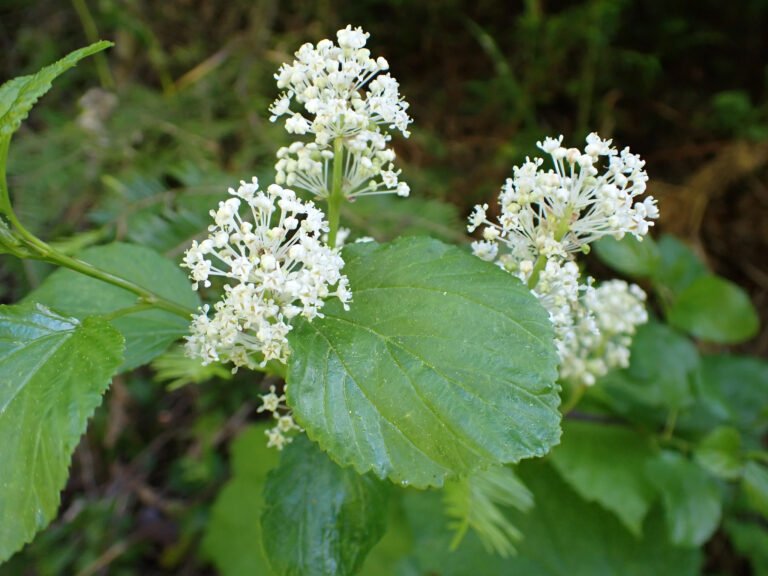
Culinary varieties selected for heavy berry production — used for syrup, tinctures, and immune-support preparations. Fast-growing, tolerant of a range of conditions, and the large flower clusters (elderflower) are edible too. Two varieties for cross-pollination.
- York and Bob Gordon — The two standard culinary production varieties.
Pawpaw
Often called America’s best-kept secret fruit, grafted pawpaw varieties produce large, creamy, tropical-flavored fruit in late summer — and we have proof they ripen right here in Idaho. They prefer some afternoon shade, making them ideal understory trees in a food forest where larger trees provide filtered light. Two trees for cross-pollination.
Varieties we often include:
- Chappell — Outstanding flavor with large, productive fruit.
- Atwood — Known for excellent fruit size and reliable production.
- Benson — Selected for flavor quality and cold hardiness.
Why Most Nurseries Don’t Carry These Varieties
Walk into any big box store or local garden center in April and you’ll find the same handful of apple, peach, and cherry varieties — Honeycrisp, Red Delicious, Elberta, Bing. These are name-recognition varieties. They sell because people have heard of them, not because they’re the best choice for our climate.
The disease-resistant modern cultivars we use — varieties like Triumph, WineCrisp, RubyRush, and Harrow Sweet — come from university breeding programs that most retail nurseries simply don’t source from. Local garden centers order from the same few wholesale distributors that stock what sells nationally. A variety bred for fire blight resistance at a Purdue research station doesn’t show up on that supply chain, even if it would outperform everything else on the shelf in Idaho’s conditions.
That’s why we source directly from specialty wholesale nurseries that grow these cultivars — and why variety selection is the single most important decision in your orchard, long before anything goes in the ground.
Popular Varieties We Avoid — And Why
These are all fine-tasting apples and pears. But in the Treasure Valley’s disease environment, they create more problems than they’re worth — especially in a no-spray permaculture orchard where you’re relying on the tree’s own genetics rather than chemical intervention.
- Honeycrisp — The most popular apple in America, and one of the most problematic to grow. A beautiful tree until it isn’t.
- Pink Lady — Excellent flavor, but a fire blight magnet in our region. Also needs a very long growing season that pushes the limits of our climate.
- Fuji — Another grocery store favorite with serious fire blight vulnerability.
- Gala — Moderate fire blight susceptibility and mediocre disease resistance overall. There are better-tasting, tougher options available.
- Red Delicious — The variety that gave backyard apples a bad reputation. Bland flavor from modern strains, poor disease resistance, and thick skin.
- Bartlett Pear — The classic grocery store pear, and one of the most fire blight-susceptible pear varieties in existence.
If you already have any of these in your yard, they’re not a lost cause — good cultural practices and a strong companion planting system can help manage disease pressure. But if you’re planting new trees, there’s no reason to start with a disadvantage when superior varieties exist.
Getting Started
Every Sovereign Grove orchard package includes 30+ professionally selected fruit trees covering this full range of species — from the everyday staples that produce hundreds of pounds of fruit to the unusual varieties that make your edible landscape genuinely unique.
Our Sovereign Plant Pack ($2,500) includes 30 trees, native keystone shrubs, and companion perennials, ready for pickup in Weiser. The Sovereign Blueprint ($4,500) adds a personal site visit, custom design, and planting guide. Or let us handle everything with a full professional installation starting at $45,000.
We also offer add-on options including thornless raspberry and blackberry bundles, hybrid hazelnut packs, grafted pawpaw collections, native pollinator starter kits, and shade tree bundles.
Visit thesovereigngrove.com to learn more, or contact us to find out which package fits your property.
The Sovereign Grove provides permaculture orchard design, food forest installation, and edible landscape consulting throughout the Treasure Valley and western Idaho — serving Boise, Meridian, Nampa, Eagle, Caldwell, Star, Kuna, Emmett, Weiser, and surrounding communities in Ada, Canyon, Washington, Gem, and Payette counties.